
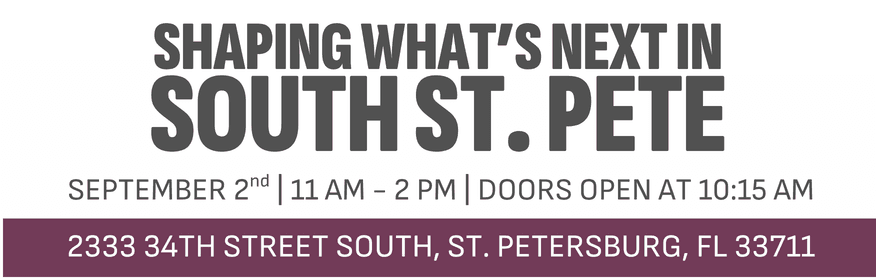

Doors open at 10:15 AM;
Lunch will be provided
HOW HAS SOUTH ST. PETE CHANGED OVER THE PAST DECADE? SEE THE DATA + LEND YOUR VOICE
South St. Pete has changed dramatically in the past 10 years. When we look at the data, we see rising education levels, higher home ownership rates, and climbing incomes.
Yet the demographic make-up of South St. Pete has also changed significantly during that same time. New residents have moved in, while previous long-term residents have moved out.
How do we navigate growth and development while making sure some people aren't displaced or left behind?
Join us for this community conversation as we explore some of the shifts we've seen since the creation of the South St. Pete Community Redevelopment Area (CRA) just over a decade ago. Leaders from Policy Partners will share findings from their recent research report and survey and make space for community members to brainstorm and dream together about how we can move forward without leaving our fellow residents behind.
WHAT YOU CAN EXPECT
We'll share info on:
- Changes in the makeup and profile of South St. Pete
- What the South St. Pete CRA is, how it's governed, and how its revenue is generated
- How you can get involved and help shape the South St. Pete CRA
You'll share ideas on:
- How to keep long-term residents feeling welcome and able to afford South St. Pete
- How to take advantage of growth and development without losing what makes South St. Pete unique
We hope to see you there!
KEY DEFINITIONS & TERMS
Gentrification: a process of neighborhood change by which a lower income area experiences demographic, cultural, and economic change, usually because of an inflow of wealthier residents and public/private investment. Gentrification can bring new businesses, resources, and services to an area, along with physical improvements. However, it can also lead to the displacement of more vulnerable residents due to rising rental prices and property values.
Displacement: when long-term residents of an area are unable to remain in their homes because of rising prices or cultural shifts, often resulting from gentrification.